




NCN Preludium 24 for mgr Gokul Das Haridas
Narodowe Centrum Nauki rozstrzygnęło konkurs Preludium 24. Wśród grantów, które otrzymają finansowanie, są dwa projekty badawcze realizowane w Uniwersytecie Szczecińskim.
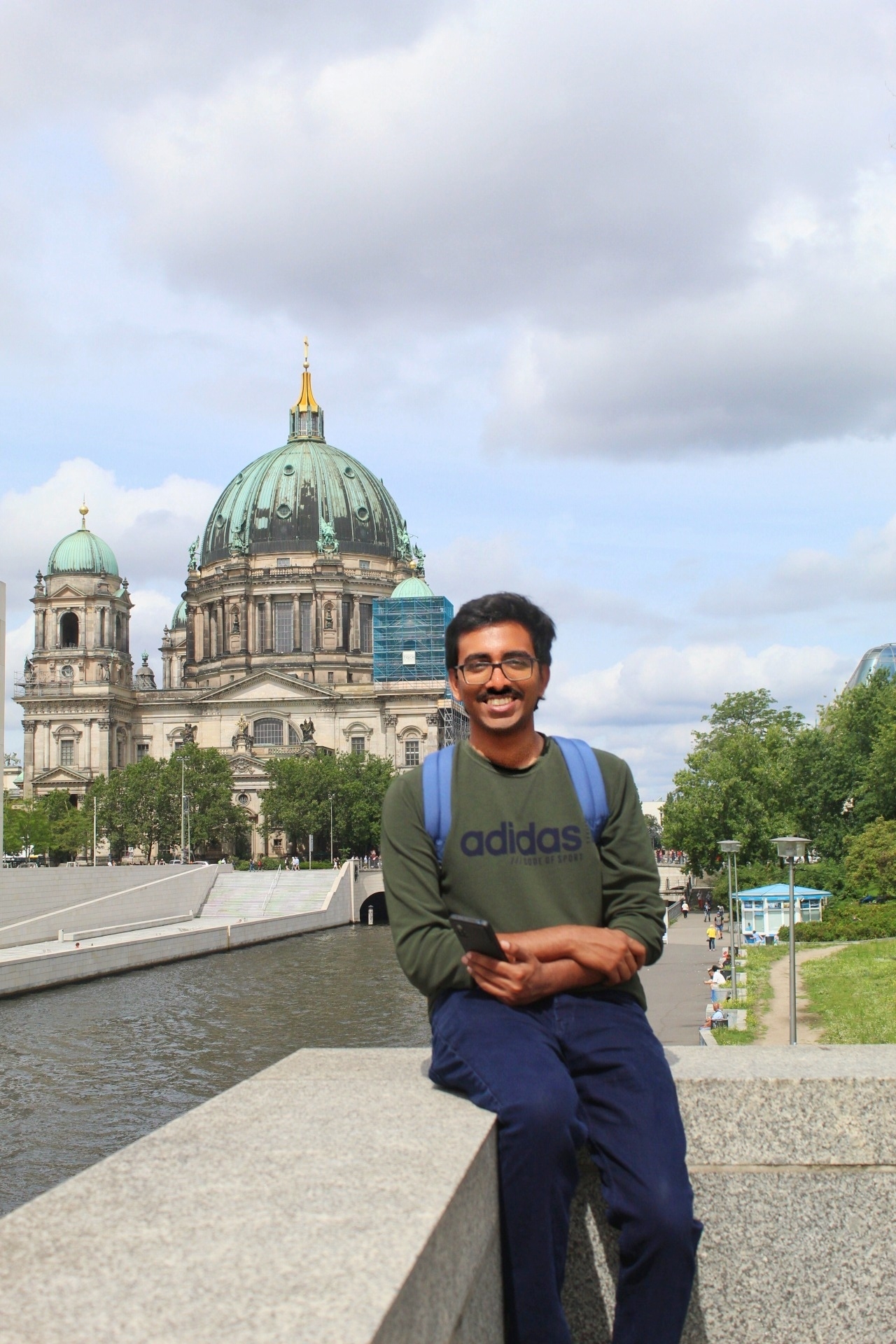
Jednym z nich jest Doktorant Szkoły Doktorskiej mgr Gokul Das Haridas (Instytut Fizyki).
Gokul otrzymał 70 000 zł za projekt: Współczynnik rozgałęzienia elektron-proton w reakcji fuzji deuteron-deuteron przy ultra niskich energiach w środowiskach metalicznych.
Opiekun projektu: prof. dr hab. Konrad Czerski.
Oto co nasz Laureat mówi na temat swojej pracy:
About my work:
„I am conducting research on low-energy hydrogen fusion in metallic environments. The main goal of this work is to study nuclear fusion reactions at very low energies in order to understand the mechanisms of hydrogen fusion — the process responsible for energy production in stars and in some giant planets. Low-energy nuclear reactions remain a largely unexplored field due to several challenges: extremely low reaction probabilities at such energies, strong background effects that can obscure experimental signals, and the limited availability of advanced accelerator facilities capable of delivering highly stable, very low-energy beams with sufficiently high currents. The University of Szczecin’s eLBRUS Laboratory is home to one of the world’s most advanced linear accelerators specialized in the investigation of low-energy nuclear reactions. Research activities in the laboratory have been supported by the CleanHME project, funded under the EU Horizon framework programme. Our group has been working on the discovery of a new reaction channel in low-energy deuteron fusion. The first experimental evidence of this reaction channel, along with its characteristic signatures, was published last year. The funding recently awarded through the PRELUDIUM project will enable us to deepen this research and further investigate the newly observed reaction channel. The support of my supervisor, Prof. Konrad Czerski, my co-supervisor Dr. Rakesh Dubey, and the entire eLBRUS laboratory team has been essential in developing and shaping this project.”
Congratulations!